
Why Provenance Matters More Than Price

The collector car market has matured significantly over the past two decades. Once viewed primarily as a niche hobby for enthusiasts, significant automobiles are increasingly recognised as luxury assets, cultural artefacts and, in some cases, stores of wealth. As a result, conversations surrounding collector vehicles often focus on values, auction results and investment performance.
From the salerooms of RM Sotheby's and Broad Arrow to the concours lawns of Villa d'Este and Pebble Beach, headlines are frequently dominated by price. Record-breaking sales attract attention, market trends generate discussion and collectors naturally seek to understand where value may emerge in the future.
Whilst price undoubtedly remains an important consideration, experienced collectors understand that it is rarely the defining characteristic of an exceptional acquisition. Instead, the most sophisticated buyers focus on a less visible but considerably more important factor: provenance.
Provenance represents the documented history and authenticity of a vehicle. It is the story that supports the asset. It provides confidence, context and credibility. Most importantly, it often determines whether a vehicle will remain desirable long after market sentiment has shifted.
In many respects, collector cars are no different to fine art, rare watches or luxury goods from the world's most respected maisons. A bespoke trunk from Louis Vuitton, a rare Patek Philippe or an important painting derives much of its value from authenticity, ownership history and cultural significance. The same principle applies within the collector car market.
Understanding Provenance
Provenance extends far beyond a registration document or service history file. Whilst documentation forms an important component of the process, provenance is better understood as the complete narrative surrounding a vehicle throughout its life.
This narrative may include ownership history, factory records, maintenance documentation, restoration work, competition participation, period photographs, factory certifications and any notable associations connected to the vehicle.
For significant collector cars, provenance often becomes one of the most valuable assets accompanying the vehicle itself. It provides buyers with confidence that a car is authentic, accurately represented and supported by evidence.
Strong provenance reduces uncertainty.
Weak provenance introduces risk.
This distinction becomes increasingly important as vehicle values rise and collectors become more discerning.
Why Two Similar Cars Can Command Very Different Values
One of the most fascinating characteristics of the collector car market is the extent to which provenance influences value.
Two vehicles may appear almost identical on paper. They may share the same model designation, similar mileage and comparable condition. Yet one may command a significant premium over the other.
The explanation is often found within the vehicle's history.
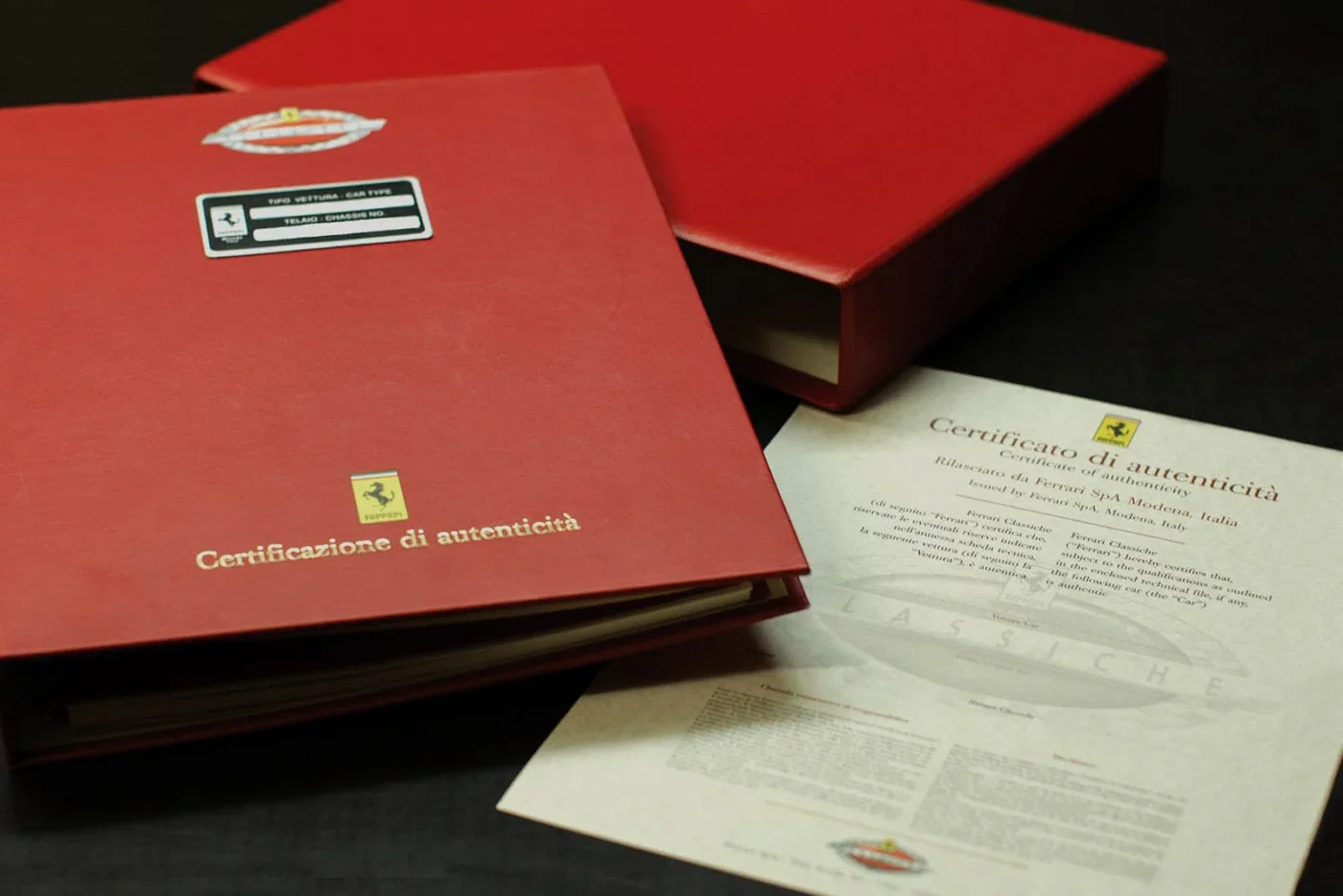
A Ferrari supported by complete ownership records, factory documentation, Classiche certification and documented stewardship is likely to attract greater confidence than an equivalent example with gaps in its history. Similarly, a Porsche retaining its original specification, maintenance records and documented provenance may be viewed considerably more favourably than a vehicle lacking the same level of transparency.
Collectors are not merely purchasing a physical object.
They are purchasing certainty.
The greater the confidence surrounding a vehicle's authenticity and history, the broader its appeal becomes within the market.
The Relationship Between Provenance and Liquidity
Whilst appreciation often dominates discussion within the collector car market, liquidity is arguably the more important consideration.
An asset's ability to attract buyers consistently over time is frequently overlooked. However, when acquisition decisions are viewed through a long-term lens, liquidity becomes a critical factor.
Provenance plays a direct role in this process.
Vehicles with strong documentation, transparent ownership histories and verified authenticity generally attract broader buyer interest. This increased confidence often translates into greater liquidity and more resilient values during periods of market uncertainty.
Conversely, questions surrounding authenticity, ownership history or documentation can significantly reduce demand.
For collectors, this distinction can have substantial financial implications.
The strongest acquisitions are not always those that appreciate the fastest. They are often the vehicles that remain desirable regardless of broader market conditions.
The Importance of Due Diligence
Recent events have reinforced the importance of independent verification within the collector vehicle market.
Whilst documentation remains essential, it should never be accepted without scrutiny. Registration records, ownership histories and supporting paperwork must be viewed as components of a wider due diligence process rather than definitive proof of authenticity.
Experienced collectors understand this principle well.
They verify records.
They investigate inconsistencies.
They seek independent opinions.
Most importantly, they recognise that confidence should be built upon evidence rather than assumption.
At the highest levels of collecting, due diligence is not viewed as an obstacle to acquisition. It is regarded as a fundamental component of responsible stewardship.
Observations from the International Collector Market
Whilst attending Villa d'Este on Lake Como, Italy, one observation became particularly apparent.
The most significant conversations were rarely centred solely on value.
Collectors discussed history.
They discussed provenance.
They discussed ownership experience.
They discussed significance.
Whilst financial considerations remained important, many acquisition decisions appeared to be influenced as much by emotion, heritage and collectability as by market performance.
This reflects a broader trend across the collector car market. As buyers become increasingly sophisticated, provenance is emerging as a defining characteristic of the most desirable vehicles.
The strongest collections are rarely assembled by chance. They are curated through informed decision-making, careful research and a clear understanding of what makes a vehicle significant.
The Touge Advisory Perspective
At Touge Advisory, we believe provenance should sit at the centre of every acquisition strategy.
Whether evaluating a modern performance car, a limited-production supercar or a historically significant collector vehicle, understanding the story behind the asset is essential.
Our role is not simply to identify opportunities. It is to provide clarity, context and market intelligence that enables clients to make informed decisions with confidence.
Through acquisition advisory, provenance research, due diligence and market analysis, we help collectors navigate an increasingly complex market where transparency and authenticity have never been more important.
In our experience, the most successful acquisitions are rarely driven solely by price.
They are driven by understanding.
Conclusion
Price will always influence a buying decision. However, price alone rarely determines the quality of an acquisition.
Provenance influences authenticity.
Provenance influences desirability.
Provenance influences liquidity.
Most importantly, provenance influences confidence.
For serious collectors, understanding a vehicle's history is every bit as important as understanding its value.
Before focusing on what a vehicle costs, buyers should first ask a simpler question:
Do I fully understand the story behind the car?
Because whilst price determines what you pay, provenance often determines what you own.
Touge Advisory supports collectors and enthusiasts across the UK and Europe with acquisition advisory, provenance research, market intelligence, sourcing and independent due diligence for significant vehicles.